How Much Walking Does Your Dog Actually Need?
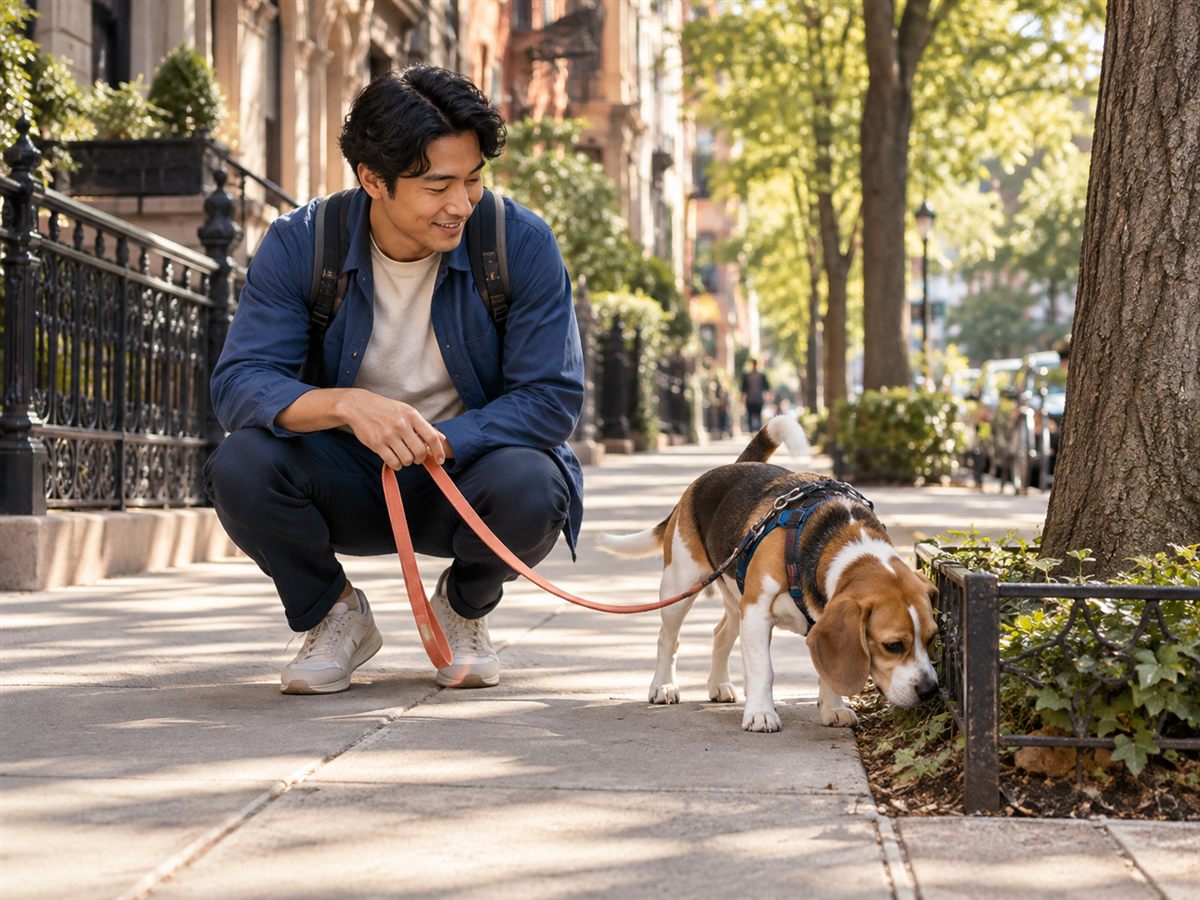
"Walk your dog more" is true often enough to be useless advice on its own. The real answer depends heavily on breed, age, and what your dog was actually bred to do — a sentence that matters more than most owners realize until their dog starts showing the signs of not getting enough.
A rough breakdown by type
These are general ranges, not strict rules — but they're a reasonable starting point if you're not sure whether your current routine is enough:
- High-energy working and herding breeds (Border Collies, Australian Shepherds, many working-line retrievers): often need 60–90 minutes of real activity a day, not just a walk around the block. A short walk plus mental work (training, a puzzle feeder) can partially substitute for pure distance.
- Medium-energy breeds (most retrievers, spaniels, many mixed breeds): generally do well with 30–60 minutes split across one or two walks.
- Low-energy and brachycephalic breeds (Bulldogs, Pugs, many toy breeds): often need less total time, but more caution — short, frequent walks beat one long one, especially in heat, since breathing-restricted breeds overheat faster.
- Senior dogs of any breed: usually need shorter, more frequent walks rather than fewer long ones — the goal shifts from exercise volume to maintaining mobility and joint health.
Signs your dog isn't getting enough
The obvious one is weight gain, but it's usually not the first sign. Watch for:
- Restlessness in the evening specifically — pacing, bringing toys over repeatedly, unable to settle.
- Destructive chewing that's new or increasing, especially in a dog who was previously fine left alone.
- Over-excitement at the door or on-leash that seems disproportionate to what's actually happening — often a sign of pent-up energy rather than poor training.
Why consistency matters more than any single walk
A single long weekend hike doesn't offset five sedentary weekdays the way owners often hope it will. Dogs — like people — generally do better with a predictable daily baseline than with occasional bursts of a lot of activity followed by very little.
This is part of why routine matters: walks at roughly the same time, most days, tend to produce a calmer, more consistently exercised dog than an irregular patchwork of walks does.