How to Introduce Your Dog to a New Walker
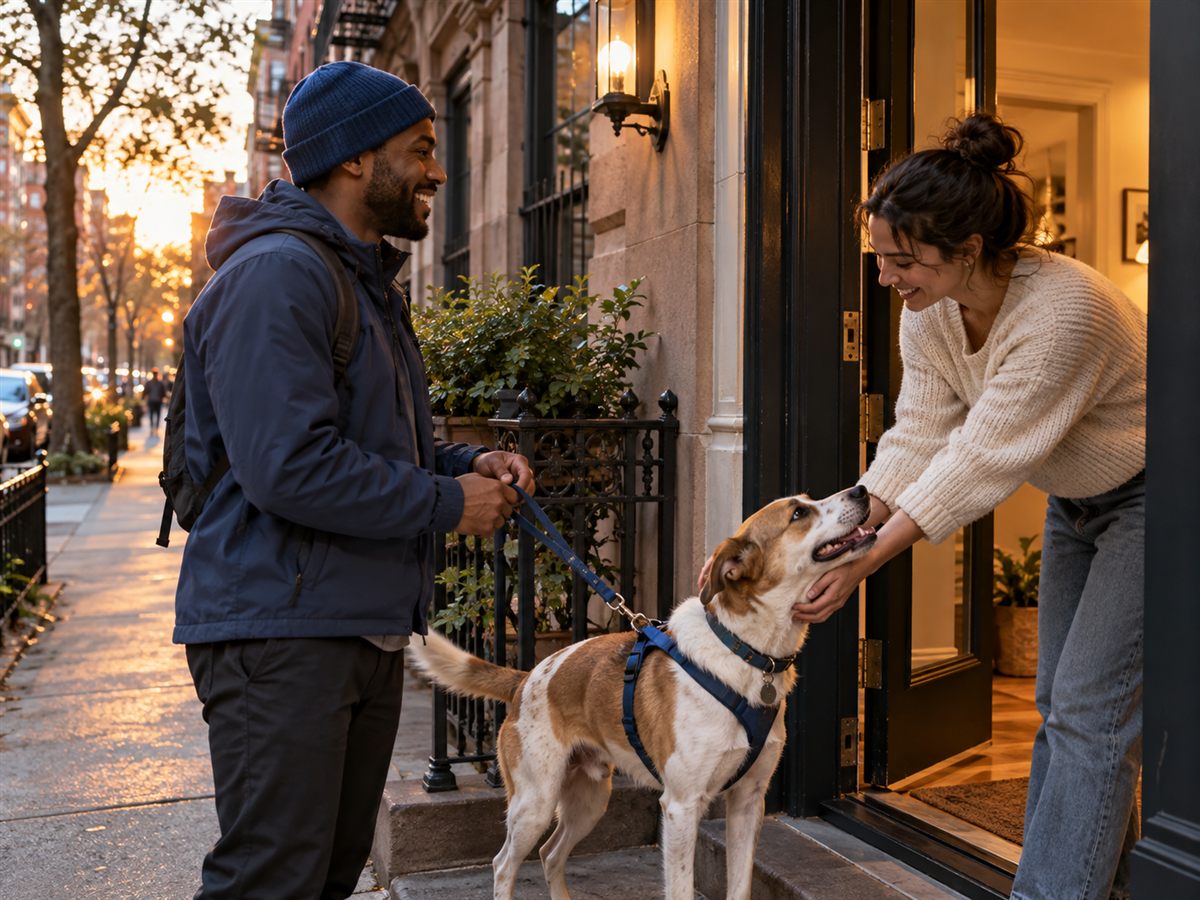
The first few minutes between your dog and a new walker set the tone for every walk after. Most of what goes wrong in that first meeting isn't about the walker's skill — it's about rushing a dog who needs a minute to figure out who this stranger actually is.
Before the walker arrives
Keep your dog's normal routine intact that day. Dogs read tension well before they understand why it's there, and a owner who's anxious about the handoff will usually make the dog anxious too, regardless of how calm the walker is.
- Leave the leash somewhere visible — a dog seeing their own leash out, in its normal spot, reads as "this is expected," not "something's happening."
- Skip the big buildup. No extended "who's a good boy, someone new is coming!" — dogs pick up on excitement and inflate it.
- Have water and any medication info written down, even if you've already put it in the app. A walker glancing at a sticky note by the door is faster than scrolling a phone with a dog already pulling toward the hallway.
The first five minutes
A good walker won't go straight for the leash. They'll let the dog approach them first, keep their hands low and visible, and talk in a normal, unhurried tone rather than the high-pitched "hi puppy!" voice a lot of people default to. If that's what you see, it's a genuinely good sign — not just politeness, but actual handling experience.
Signs it's a real match
Within the first walk or two, you're looking for more than "the walk happened." Watch for:
- Your dog's leash behavior on return — pulling hard the whole way back toward the walker usually means they're comfortable, not overstimulated.
- Whether the walker mentions anything specific about your dog unprompted — a slight limp, hesitating at a particular corner, sniffing somewhere new. That's attention, not just supervision.
- How your dog greets a walker the next time you meet. The first meeting is about tolerance; the second is the real signal.
When it's not a fit, and that's fine
Some dogs just don't click with some people, the same way some don't click with every stranger at the dog park. That's not a failure on either side. The point of paying close attention during the first walk or two is exactly so you can tell early, and let us know if something felt off, before it becomes a bigger adjustment for your dog.